
Floor Tile Selection and Installation Overview

Floor tiles provide a durable, rigid walking surface engineered to handle foot traffic, moisture, and daily wear when set over a properly reinforced substrate. For homes across Franklin, Brentwood, and Williamson County, choosing the right floor tile requires evaluating material density, slip resistance, and subfloor deflection before setting mortar touches the floor. Oleksiy Kolesnyk personally evaluates every project on site to inspect floor framing and subfloor stiffness. A stable assembly prevents cracked grout lines and loose units, creating a floor that stands up to decades of everyday use.
Understanding Subfloor Prep, Tile Materials, and Layout
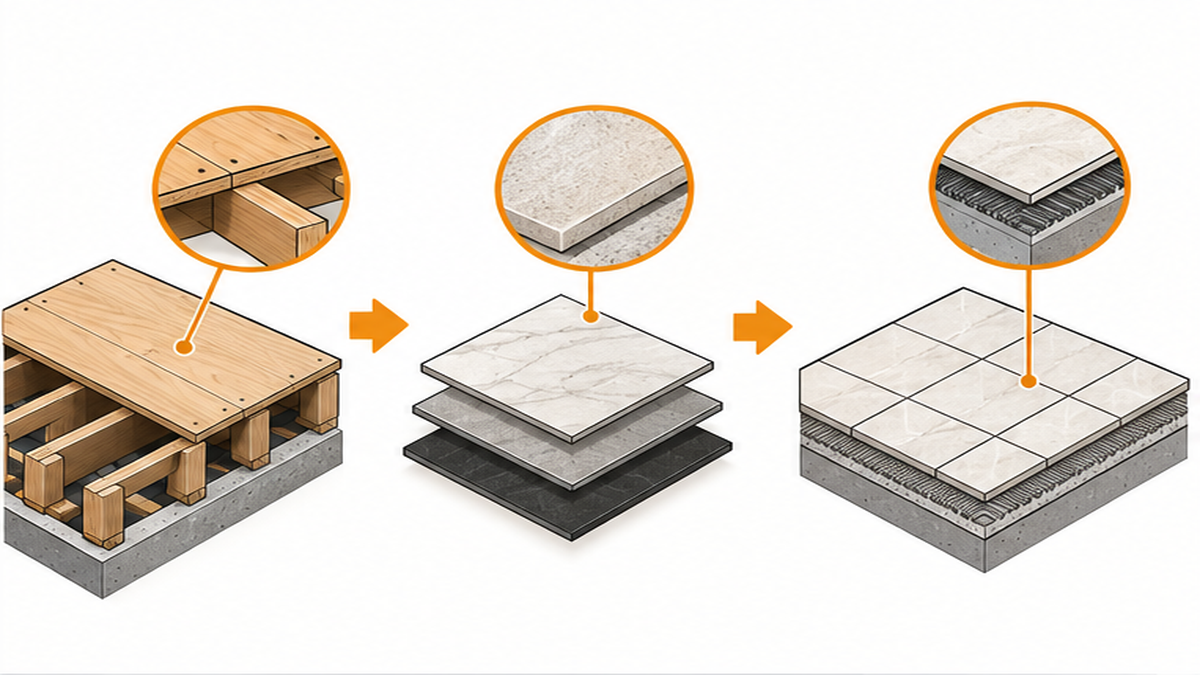
A durable floor begins beneath the tile. Ceramic and porcelain assemblies cannot flex; if the underlying wooden framing deflects when walked upon, the rigid tile above will crack or debond. Setting standard floor units or large-format planks requires assessing the joist span, replacing damaged subfloor panels, and installing a dedicated cement backerboard or uncoupling underlayment bedded in thin-set mortar. For rooms with concrete slabs, our inspection checks for structural settlement cracks that need isolation membranes prior to setting.
Material selection defines daily maintenance and durability. Porcelain floor tiles are fired at higher temperatures than standard ceramics, making them denser, less porous, and suited for high-moisture areas like entryways and utility rooms. Large-format floor tile options, measuring fifteen inches or larger on any side, require precise substrate flatness—within one-eighth inch over ten feet—to avoid lippage, where one edge sits higher than its neighbor. Planning a dry layout before spreading mortar ensures balanced cuts against opposite walls and keeps grout joints straight through doorways. Choosing between sanded cementitious grout and stain-resistant epoxy finishes determines how often you need to seal the floor joints.
Key Decision Points for Homeowners Before Installation
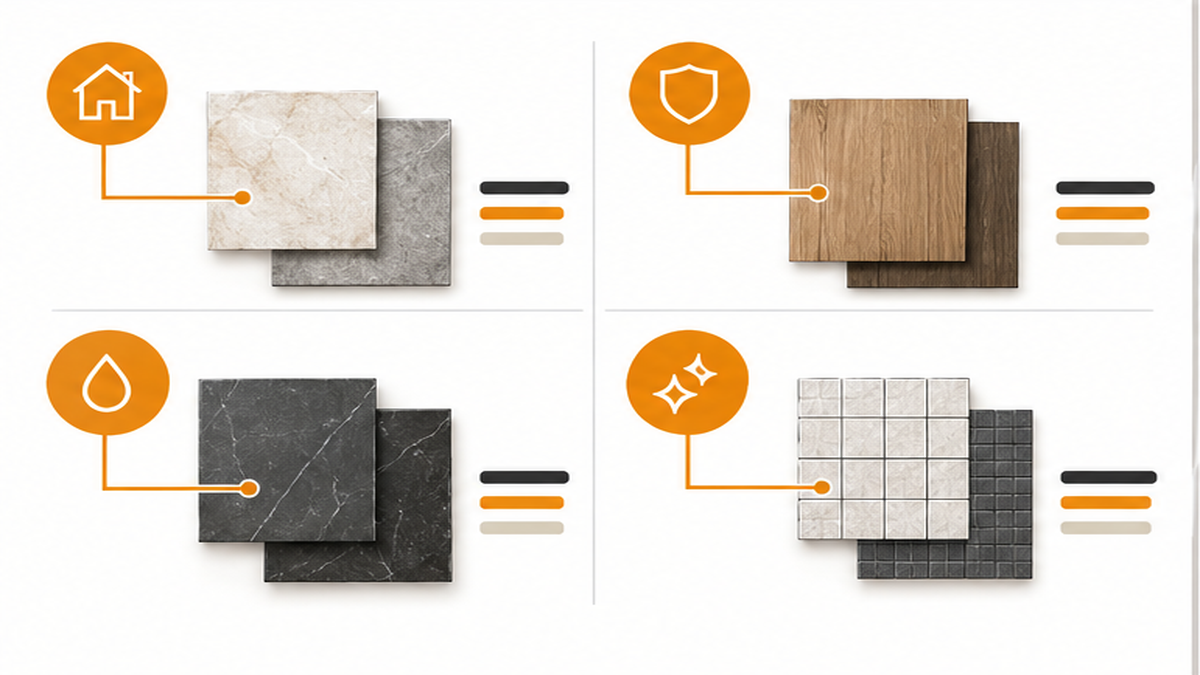
Before ordering materials or scheduling work, homeowners should weigh four practical project variables that dictate installation scope, durability, and daily use:
- Tile Material and Wear Ratings: Porcelain resists moisture absorption and heavy claw or foot traffic better than standard red-body ceramic. Check the PEI (Porcelain Enamel Institute) wear rating on the box; class three or four handles residential main living areas and kitchens.
- Format Size and Lippage Control: Rectified large-format planks deliver narrow grout lines, but they require mechanical leveling clips and an ultra-flat floor. Smaller square formats conform more easily to minor floor variations without extensive substrate grinding.
- Threshold and Height Transitions: Adding backerboard, mortar, and half-inch tile often raises the finished floor height by three-quarters of an inch. Plan threshold reducers where tile meets hardwood or carpet so doors swing freely and transitions do not cause tripping hazards. Reviewing floor parquet or adjacent wood profiles early helps identify required transition heights.
- Grout Formulation: Standard cement grouts require routine penetrating sealers to block grease and dirty mop water. High-performance premixed or epoxy formulas cost more up front but resist staining and never require resealing.
Common Floor Tiling Mistakes That Cause Premature Failure
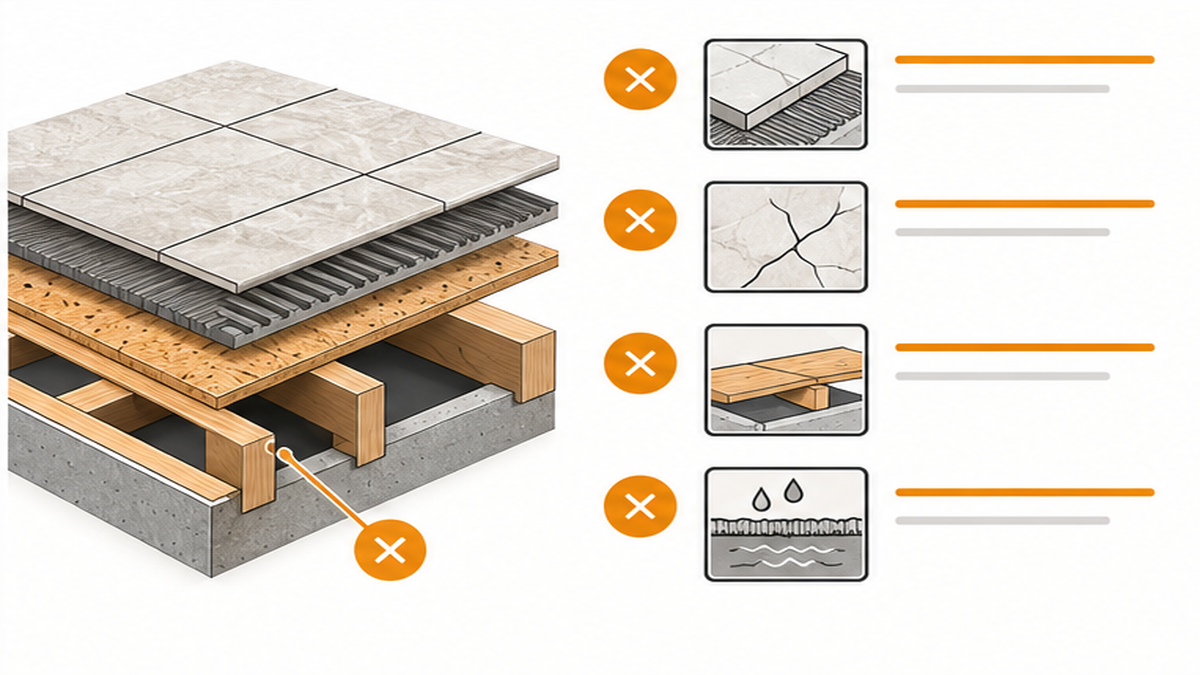
Installing floor tile over an unreinforced subfloor is the most frequent cause of broken tiles. Laying tile directly over standard plywood or particle board leads to moisture absorption and movement, which shears the mortar bond within months. A proper subfloor assembly requires mechanical fasteners, mortar under the underlayment, and taped seams.
Spot-bonding tile with mounds of mortar—often called five-spotting—leaves hollow cavities under the tile body. When furniture legs or heavy footsteps press on an unsupported corner, the tile snaps. Full mortar coverage achieved by combing thin-set mortar in directional ridges and collapsing them during placement supports the entire tile face.
Another frequent mistake is omitting perimeter expansion joints. Tile expands and contracts with indoor humidity and temperature shifts. If tile is installed tight against baseboards or framing without an eighth-inch perimeter gap, seasonal movement causes tenting, where rows buckle upward off the floor. Skipping transition strips at room thresholds also leaves exposed tile edges vulnerable to chipping from vacuum cleaners and hard shoes.
When to Hire a Dedicated Craftsman for Your Floor
While homeowners can easily sweep and measure rooms, setting permanent tile over complex framing calls for professional assessment. If your existing floor sags, bounces under foot, or shows cracked grout from an earlier installation, a craftsman needs to calculate joist deflection and sister framing members before new materials are placed. Homes across Franklin often have settled framing that demands specialized self-leveling underlayments.
Large-format tiles measuring twenty-four inches or larger also require specialized wet saws, suction lifters, and calibrated trowel notches to guarantee complete mortar coverage. When projects involve delicate thresholds, custom patterns like herringbone, or coordination with adjacent wall tile shown in our tile walls and backsplashes guide, hiring Oleksiy Kolesnyk ensures the layout is calculated from the room centerline outward with symmetrical perimeter cuts.
Related Flooring and Tile Guides
Plan Your Flooring Project with Craftsman Tile and Stone
Frequently Asked Questions About Floor Tiles
How is Tile Floor Installation priced in my area?
What kind of tile is best for floors?
What are the common tiling mistakes?
How do I get an estimate?
Long-Term Care and Maintenance for Tiled Floors
Routine care protects the glazed face of your tile and preserves clean grout lines. Sweep or vacuum with a soft brush attachment several times weekly to remove gritty sand and soil, which acts like sandpaper under shoe soles. When mopping, use a pH-neutral cleaner mixed in warm water rather than harsh acidic or bleach-based solutions that degrade cementitious grout over time.
For standard cement grout installations, apply a high-grade penetrating sealer every one to two years to block grease, dirty water, and spills from penetrating the pores. Inspect high-traffic doorways and kitchen work zones annually for worn sealer. Wipe up standing liquids promptly, and place felt protector pads under dining chairs and heavy furniture legs to prevent surface scratching during everyday movement.