
Bathroom Flooring
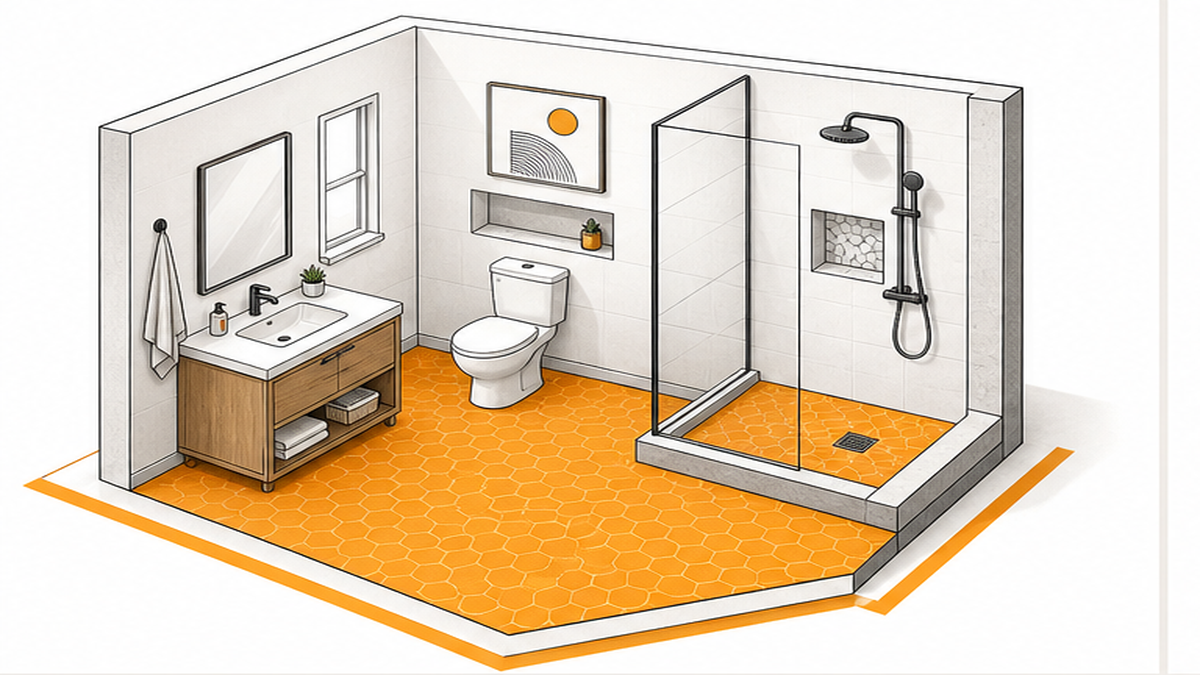
Porcelain tile remains the most reliable bathroom flooring material for Franklin homes due to its low water absorption and long-term durability. When planning a custom bathroom remodel, the floor takes the most abuse from moisture, foot traffic, and temperature shifts. We install wet-area tile that handles these conditions while matching your design goals. Oleksiy Kolesnyk personally evaluates your subfloor and layout to ensure the foundation is right before any thin-set mortar is mixed. Choosing the right material means balancing slip resistance, grout joint size, and moisture protection. A proper installation starts with a solid substrate and ends with a level, symmetrical finish.
Understanding Bathroom Flooring Materials and Prep
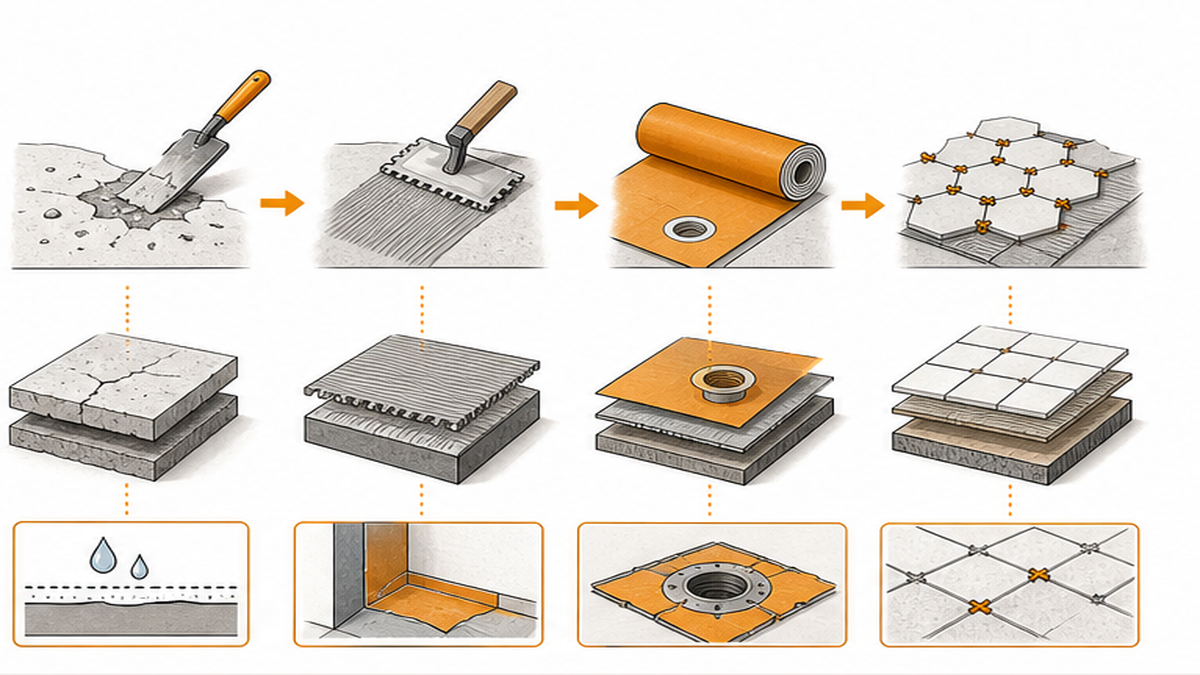
Porcelain tile is denser than standard ceramic, making it highly water-resistant and ideal for full bathroom floors and custom shower pans. Natural stone offers a premium look but requires regular sealing to prevent water damage and staining. Beyond the finish material, the substrate dictates how well the floor performs over time. We check for deflection—or bounce—in the floor joists before laying backerboard. If the subfloor flexes, the grout joints will crack.
Proper surface prep involves removing the old flooring down to the plywood, securing the subfloor, and applying the correct underlayment. In wet areas, we use TCNA-standard waterproofing methods to protect the structure of your home. Every tile is then set with purpose, focusing on alignment, levelness, and clean edges. We pay close attention to the thin-set mortar coverage, ensuring each tile is fully supported to prevent hollow spots. This careful prep work is what separates a temporary cosmetic fix from a floor that lasts for decades.
Key Decisions for Your Tile Floor
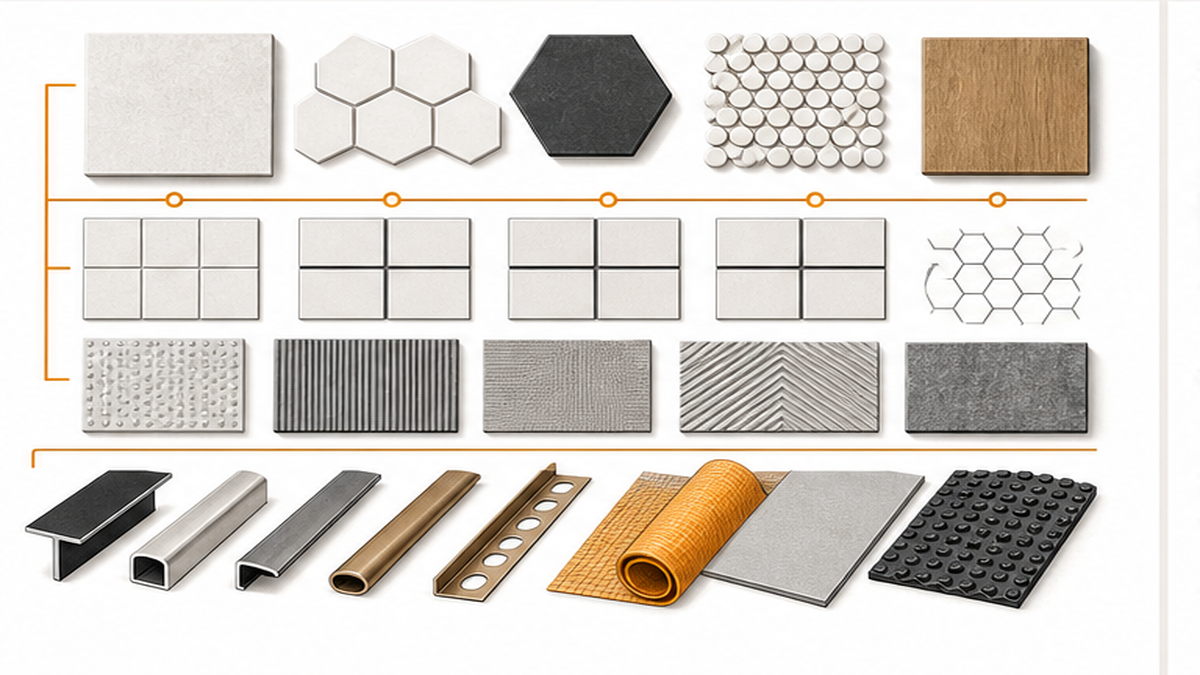
Selecting bathroom flooring involves more than picking a color. First, consider slip resistance. Matte finishes or textured porcelain provide better traction in wet areas compared to highly polished tiles. Second, think about grout joint size. Large-format tiles minimize grout lines, making the floor easier to clean, but they require a perfectly flat substrate to avoid lippage—those uneven edges that catch your toes.
Third, factor in the transition to other rooms. We plan the layout so the bathroom floor meets the hallway or bedroom floor cleanly, often requiring specific underlayment thicknesses to match heights. Finally, decide on the scope of demolition. Installing new tile over an existing floor usually leads to height issues and hides underlying water damage. We recommend full removal to inspect the subfloor and start with a clean slate. If you plan to install radiant floor heating, you must select a tile and thin-set mortar that are compatible with the temperature fluctuations.
Common Pitfalls in Bathroom Flooring
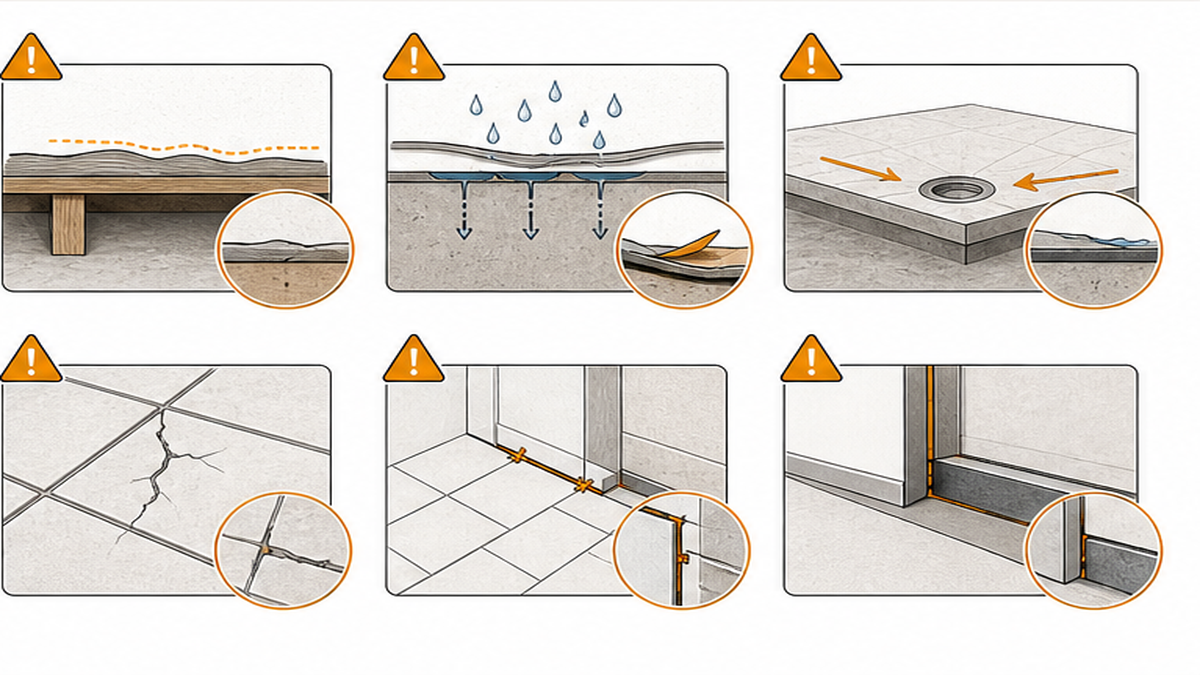
A frequent mistake in bathroom remodeling is ignoring the condition of the subfloor. Laying expensive tile over rotting plywood or uneven joists guarantees future cracks and loose tiles. Another common error is failing to plan the layout before mixing the thin-set mortar. Without a dry-fit, you often end up with awkward, narrow tile cuts along the walls or near the tub fixture.
Homeowners sometimes choose a wall tile for the floor, which lacks the necessary density and slip resistance for heavy foot traffic. Skipping proper waterproofing outside the immediate shower area is another risk. Water splashes from the tub or sink can seep through standard grout if the substrate isn't protected. Finally, rushing the cure time leads to compromised floors. Walking on newly set tile before the mortar fully cures will shift the alignment and weaken the bond. We also see issues where previous installers failed to leave appropriate expansion joints around the perimeter of the room. Without room to expand, the tile can buckle against the baseboards during seasonal temperature changes.
When to Hire a Tile Professional
Certain signs indicate you need a professional tile contractor rather than a weekend DIY attempt. If your current bathroom floor feels squishy or bouncy, you likely have hidden structural rot that requires proper demolition and framing repair. Installing large-format tiles also demands professional tools and experience. These heavy tiles require a perfectly flat substrate and specific thin-set mortar coverage to prevent cracking.
Custom shower pans and wet-area waterproofing are strict code and safety issues. If a shower pan fails, the resulting water damage often costs more than the original remodel. Complex layouts, such as herringbone patterns or curbless shower transitions, require precise math and careful cutting. Oleksiy brings over 20 years of tile and stone experience to these exact challenges. His fine arts background supports the symmetry and aesthetic alignment required for high-end custom tile work. We handle the substrate prep, the waterproofing, and the final grout lines so you know the floor is structurally sound. When you hire Craftsman Tile and Stone, you get the principal craftsman executing every phase of the project.
Related Services
Plan Your Flooring Project
Planning a custom bathroom remodel in Franklin or Williamson County starts with a clear understanding of your space. We provide detailed, written estimates after inspecting your subfloor, discussing your material choices, and measuring the exact square footage. Oleksiy personally handles every project, ensuring your new bathroom flooring is installed with artisan precision. Request an estimate today to review your layout options and get a realistic timeline for your project. We pride ourselves on honest communication, fair pricing, and delivering a finished product that stands up to daily use.
Common Questions About Bathroom Flooring
What is the best material to put on a bathroom floor?
How long does a bathroom tile remodel take?
How do I request a bathroom remodel estimate?
Keeping Your Tile Floor Clean and Protected
Keeping your custom tile floor looking new requires simple but consistent care. Sweep or vacuum regularly to remove abrasive dirt that can wear down the finish. Wash porcelain and ceramic floors with a neutral pH cleaner and warm water, avoiding harsh acidic chemicals that degrade the grout joints. If you have natural stone flooring, use only cleaners specifically formulated for stone to protect the surface sealer.
Wipe up standing water near the shower or tub promptly to prevent moisture from sitting on the grout lines. We recommend inspecting the caulk joints where the floor meets the tub or baseboards annually, replacing any cracked or peeling caulk to maintain a watertight seal. If your floor uses standard cement grout, plan to reapply a penetrating sealer every year to prevent staining from cosmetics and hard water. Proper maintenance preserves the clean, symmetrical look of your tile and extends the life of the installation.